

Women in Science
Interviews with
The career of Dr. Frauke Christ (left in the picture) spans from a Harvard postdoc to her current role at KU Leuven, where she translates university health research into real-world patient applications. As an Innovation Manager, she bridges the gap between academia and industry to ensure cutting-edge science successfully reaches the clinical market. In this interview, she reflects on the power of mentorship, navigating life as a working mother abroad, and why she advises young scientists to slow down.

Meet Frauke Christ

Curie’s legacy rests not only in what she uncovered, but on how profoundly she reshaped scientific understanding. Her pioneering work on radioactivity, and the discovery of polonium and radium, opened new paths in physics and chemistry, ultimately influencing the development of medical imaging, radiology, and cancer treatment.
Remember Marie Curie
Lenie van den Broek is an accomplished scientist whose work sits at the intersection of research, collaboration, and real-world impact. Through her career, she has contributed to advancing scientific knowledge while actively engaging with the broader research community.
Beyond her professional achievements, Lenie is known for her dedication to mentoring and knowledge sharing, supporting colleagues and early-career researchers alike. Doctoral Candidate Artur S. Rodrigues spoke with her to learn more about her journey, her perspectives on science, and her reflections on what it means to build a career as a woman in STEM today.

Meet Lenie van den Broek
On International's Women Day, doctoral candidate Aikaterini Sofia-Leonida interviewed Sarah Fadda (left in the photo). Her path into science developed gradually through curiosity, opportunity, and a willingness to adapt. After studying chemical engineering in Italy and completing a PhD at Politecnico di Milano, Sarah gained international research experience at Imperial College London before moving into industry. Today, she works for Siemens Industry Software at the intersection of process modelling and industrial application, where collaboration across disciplines turns complex theoretical concepts into practical solutions.
Reflecting on her journey, Sarah highlights the importance of staying open to different career paths, building confidence in male-dominated environments, and encouraging more women to pursue leadership roles in science and engineering.

Meet Sarah Fadda

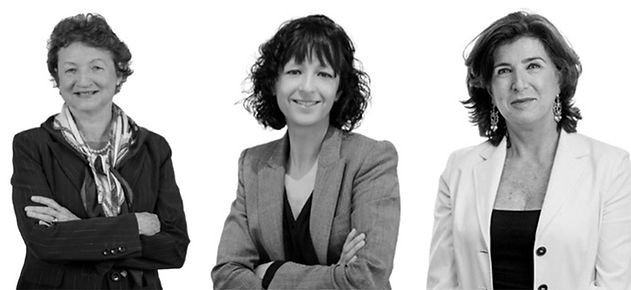
Let’s meet another “Woman in Science” part of our MSCA GET-IN network!
Chiara Martinello, PhD student at the Côte d’Azur University in Nice interviewed Els Verhoeyen to get to know more about her life and how she became the resourceful and brilliant scientist she is, with some insights on what is the reality to be a “Woman in Science” nowadays.
Els Verhoeyen is a research director at the Institute for Health and Medical Research (INSERM) with a dual affiliation: the international center for infectiology research (CIRI) in Lyon (France) and the Mediterranean Centre for Molecular Medicine (C3M) in Nice (France). Her research is focused on the development of lentiviral vectors and gene editing tools for gene therapy, especially for blood diseases. She is also the president of the French Society of Cell and Gene Therapy (SFTCG) and a board member of the European Society of Gene and Cell Therapy (ESGCT).

Meet Els Verhoeyen
Meet Prof. Marianne Carlon

Marianne Carlon is a recently appointed assistant professor at the world-class university KU Leuven, where she is at the forefront of developing innovative therapeutic approaches for people living with chronic lung diseases like cystic fibrosis – thanks also to her successful involvement in a current MSCA-funded European research network.
She is a supportive mentor for students at different career stages, and a nature and sports enthusiast in her free time. We have interviewed her to learn more about her life and career – and to reflect on what it means to be a woman in STEM today.